
Most wallet failures do not begin with a broken blockchain. They begin with a successful transaction that did exactly what its code instructed. That is the counterintuitive problem transaction simulation addresses: the danger is often not that a transaction will fail, but that it will succeed in a way the user did not understand. For DeFi users moving between Ethereum and EVM-compatible networks, a multi-chain wallet can therefore serve as more than a key holder. It can become an interpretation layer between human intent and smart-contract execution.
That distinction matters in the United States, where a user may move from an Ethereum decentralized exchange to a layer-2 network, a lending protocol, or a bridge without changing the basic browser workflow. The interface may look familiar while the chain, token contract, gas market, liquidity, and security assumptions differ. Transaction simulation cannot remove those differences. It can, however, expose parts of the transaction’s likely outcome before a signature turns an intention into an irreversible state change.
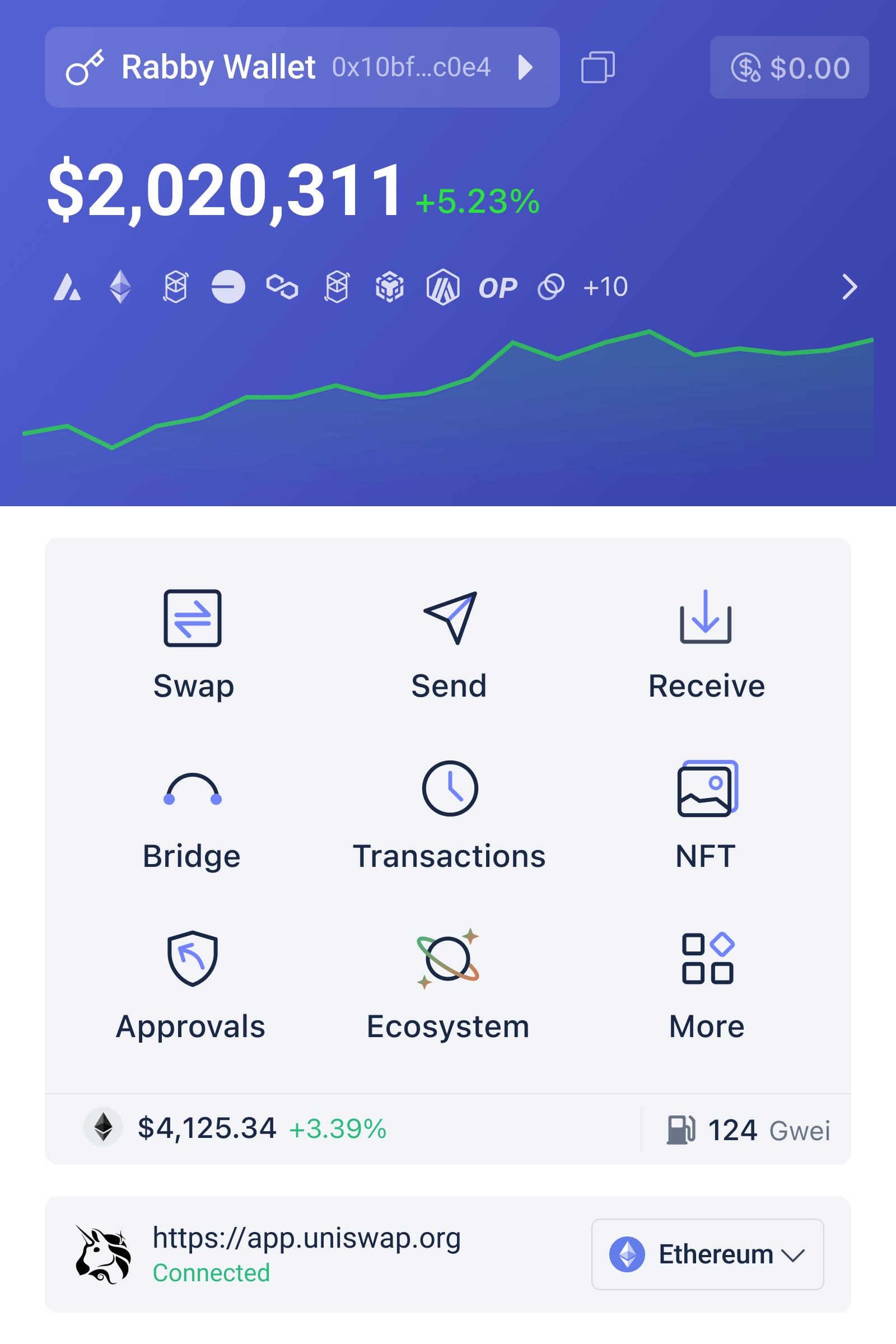
Two wallet models: signing blindly or inspecting the expected result
A conventional browser wallet often presents a request in terms that are technically correct but difficult to interpret: a destination address, a network, a gas estimate, and sometimes raw contract data. The user is asked to approve a message produced by an application, even though the meaningful question is usually different: “What will I own, spend, authorize, or lose if this executes?”
A simulation-aware wallet takes another route. It sends an approximate version of the proposed transaction to an execution environment, commonly through an RPC provider, without broadcasting it to the live network. The resulting state changes can then be translated into useful signals: tokens leaving an account, assets arriving, approvals being created, or a contract call reverting. This is not a prediction in the everyday sense. It is a controlled replay based on the state visible to the simulator at that moment.
The difference between these approaches is best understood as a comparison between syntactic review and semantic review. Syntactic review asks whether the transaction is addressed to the expected chain and contract. Semantic review asks what the call appears likely to do. The second question is much closer to user intent, which is why it can be especially valuable when interacting with unfamiliar DeFi applications.
For someone considering a rabby extension download, the practical appeal is not simply that the wallet supports many networks. The more important question is whether the extension helps connect a familiar action—swapping, depositing, borrowing, minting, or approving—to the underlying state transition. A multi-chain wallet becomes more useful when chain selection, asset balances, contract interaction, and expected results are considered together rather than displayed as isolated fields.
How transaction simulation works under the surface
Suppose a user requests a token swap. The decentralized application constructs a transaction containing a target contract, encoded function data, an account address, a gas limit, and sometimes a value amount. The wallet can ask a node or RPC service to execute that call against a recent snapshot of the chain. Because the call is not broadcast, the resulting state changes are discarded. The wallet can inspect the temporary result and present an interpretation before the user signs.
This process is closely related to the way developers test smart contracts, but the purpose is different. A developer may inspect logs, traces, and storage changes to diagnose code. A wallet instead needs to compress technical output into a decision aid. It may highlight that a user will send one asset and receive another, that an approval grants spending authority, or that the transaction is likely to revert. The challenge is translation: too little detail hides risk, while too much detail turns every approval into a debugging session.
There is also an important distinction between a simulation and a quote. A swap quote describes an expected exchange rate under particular liquidity and slippage assumptions. A simulation replays the proposed call using an observed state. The quote may say what the application intends to obtain; the simulation may reveal whether the encoded transaction actually produces that result. Neither one guarantees the final outcome, because the live chain can change between review, signing, and inclusion in a block.
That timing issue is a core limitation. Ethereum and other EVM chains are shared state machines, and other transactions can alter balances, liquidity, prices, nonces, or protocol conditions. A simulation can be accurate for the state it saw and still become stale moments later. Private transaction routing, unusual block-building behavior, cross-chain messages, and contracts that depend on external or time-sensitive conditions can make the gap wider. Simulation is evidence, not an insurance policy.
Why the multi-chain setting changes the risk calculation
Using several EVM networks introduces more than a longer chain list. Each network can have its own native gas asset, RPC behavior, bridge ecosystem, block timing, token deployments, and concentration of liquidity. Two tokens with the same ticker may be unrelated contracts on different chains. A transaction that looks economically sensible on one network can be meaningless—or unexpectedly expensive—on another.
This is where the multi-chain wallet comparison becomes practical. A single-chain wallet can narrow the user’s mental environment: fewer networks, fewer native assets, and fewer opportunities to confuse a contract address. A multi-chain wallet offers broader access and a smoother workflow, but it also increases the number of variables that must be identified correctly. The advantage is convenience and coordination; the cost is a larger surface area for mistakes.
Transaction simulation helps with one part of that problem by tying the proposed action to a selected network and visible state. If the wallet shows that an account will receive nothing, lose an unexpected token, or create a broad approval, the user has a chance to stop. Yet simulation cannot determine whether a bridge is financially attractive, whether a protocol’s governance is trustworthy, or whether a token will remain liquid after the transaction. Those are economic and institutional judgments, not merely execution outcomes.
A useful mental model is to separate three layers of risk. First is execution risk: will the transaction revert, use excessive gas, or produce an unexpected state change? Simulation is strongest here. Second is authorization risk: has the user granted a contract more control than necessary? Simulation can make approvals more visible, but the user still needs to understand allowance scope and revoke permissions when appropriate. Third is system risk: is the application, bridge, token, or counterparty itself sound? No wallet preview can settle that question.
Rabby’s position in the workflow
Recent project messaging describes Rabby as a wallet for Ethereum and EVM networks, with support intended to help users work across chains through Chrome and Brave. That positioning is relevant because the value of a wallet is not only the number of networks it can connect to. It is also the quality of the handoff between a decentralized application and the user’s final signing decision.
For a new installation, the sensible workflow is deliberately unglamorous. Obtain the extension from a source you can independently verify, confirm the browser and network context, create or import a wallet only when you understand the recovery implications, and protect the seed phrase offline. Then connect to a known application and treat the transaction preview as a question to investigate—not a green light that eliminates further judgment.
Before signing, compare the displayed chain with the chain you intended to use. Check the contract and application context. Read the asset movements, not just the total gas cost. Pay special attention to approvals, permit signatures, arbitrary contract calls, and transactions that appear to move more value than the visible user interface suggests. If the simulation fails, ask why. A failure may indicate insufficient balance or slippage, but it may also reflect a stale RPC response, a contract restriction, or a genuine problem in the application.
The comparison with a basic wallet is therefore not “safe wallet versus unsafe wallet.” It is closer to “more interpretation versus less interpretation.” A simulation-aware interface can reduce cognitive load by surfacing likely effects, but added interpretation creates its own responsibility: users must understand what the preview covers and what it does not. A reassuring visual signal should never override an unfamiliar domain, a suspicious approval, or a request that conflicts with the user’s purpose.
Where simulation breaks—and what to watch next
Some smart-contract behavior is difficult to represent perfectly before execution. Contracts may depend on rapidly changing prices, block timestamps, oracle updates, signatures from another system, or a message that has not yet arrived from another chain. A simulation may also use an RPC endpoint whose data is delayed, incomplete, or subject to provider-specific behavior. These are not necessarily defects in the wallet; they are boundaries created by distributed execution and changing state.
Cross-chain activity makes the boundary especially clear. A bridge transaction may be simulated on the origin chain, while the meaningful result depends on a later action by relayers or a destination-chain contract. The first transaction can succeed even if the overall transfer is delayed or exposed to a separate operational risk. In that case, a good preview explains the local action, but it cannot certify the entire multi-step journey.
The near-term implication is conditional rather than certain: if multi-chain DeFi continues to spread across specialized networks, wallets that explain state changes may become increasingly important as coordination tools. The signal to watch is not simply how many chains a wallet lists. It is whether previews remain understandable across swaps, lending actions, approvals, signatures, and cross-chain messages—and whether users can distinguish a failed simulation from a trustworthy opportunity.
The most reliable habit is simple: use simulation to slow down the moment before signing. A multi-chain wallet can make that pause more informative by showing the likely consequences in context. But the final safety boundary remains human judgment. The wallet can replay code; it cannot decide whether the code belongs to an application you trust, whether the price is fair, or whether the transaction serves your actual objective.
Frequently asked questions
Does transaction simulation guarantee that a transaction is safe?
No. It can reveal likely execution results and highlight some unexpected transfers, approvals, or reverts, but it is based on a particular snapshot of blockchain state. Prices, liquidity, contract conditions, and other transactions can change before inclusion. Simulation reduces uncertainty; it does not remove smart-contract, economic, or application risk.
Why is a multi-chain wallet useful for DeFi users?
It can bring accounts, networks, balances, and transaction reviews into one workflow, which is convenient when using Ethereum and other EVM-compatible chains. The trade-off is a larger decision space: users must verify the network, token contract, gas asset, application, and bridge context. Convenience is most valuable when paired with careful chain and transaction checks.
What should I do when a transaction simulation fails?
Do not repeatedly approve the request without understanding the cause. Check the selected network, token balance, allowance, slippage settings, gas asset, and application status. A failure can be temporary or technical, but it can also signal that the requested call cannot execute as presented. If the explanation remains unclear, stopping is a rational outcome.